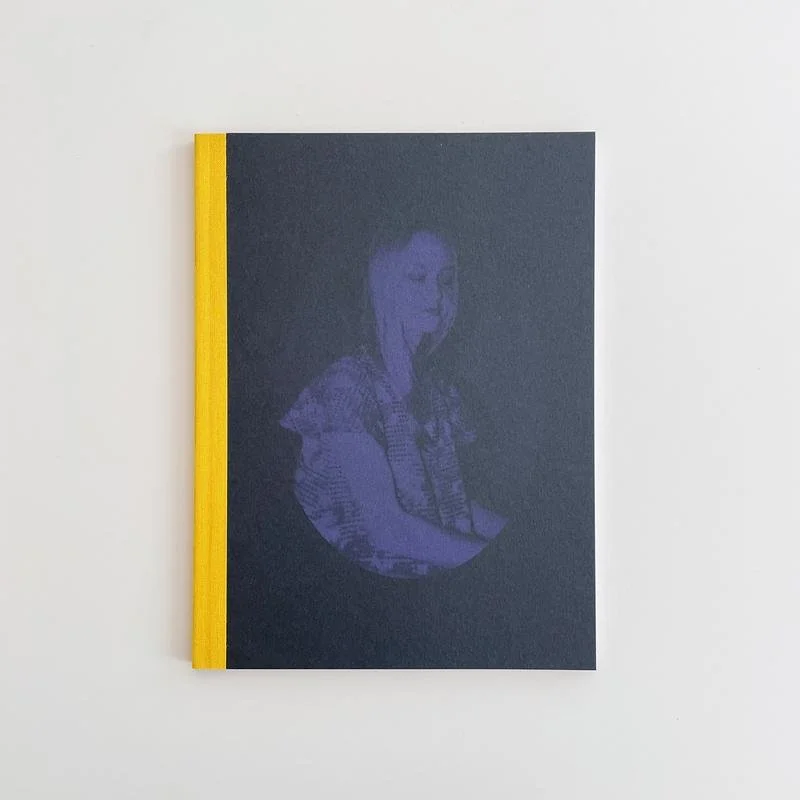
Published Saint Agnes Studio, 2023
Essay by Margaret Sartor
Design by Cara Buzzell
Perfect Bound Paperback, 56 Pages, 6” x 8.75”
Digital Offset & 1-Color Risograph
Printed & Bound by Conveyor Studio
Edited by Jessina Leonard & Keavy Handley-Byrne
First Edition, Edition of 40
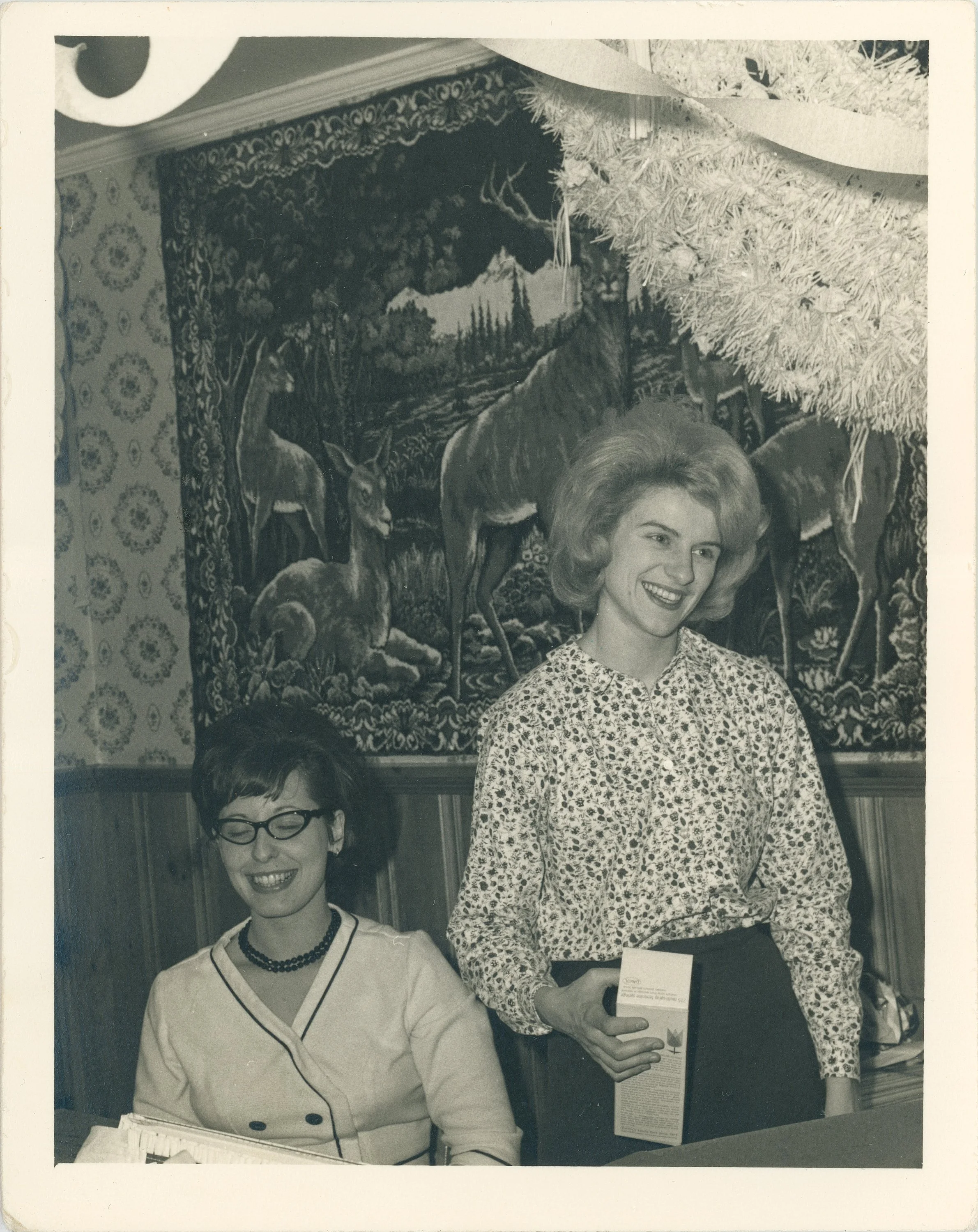
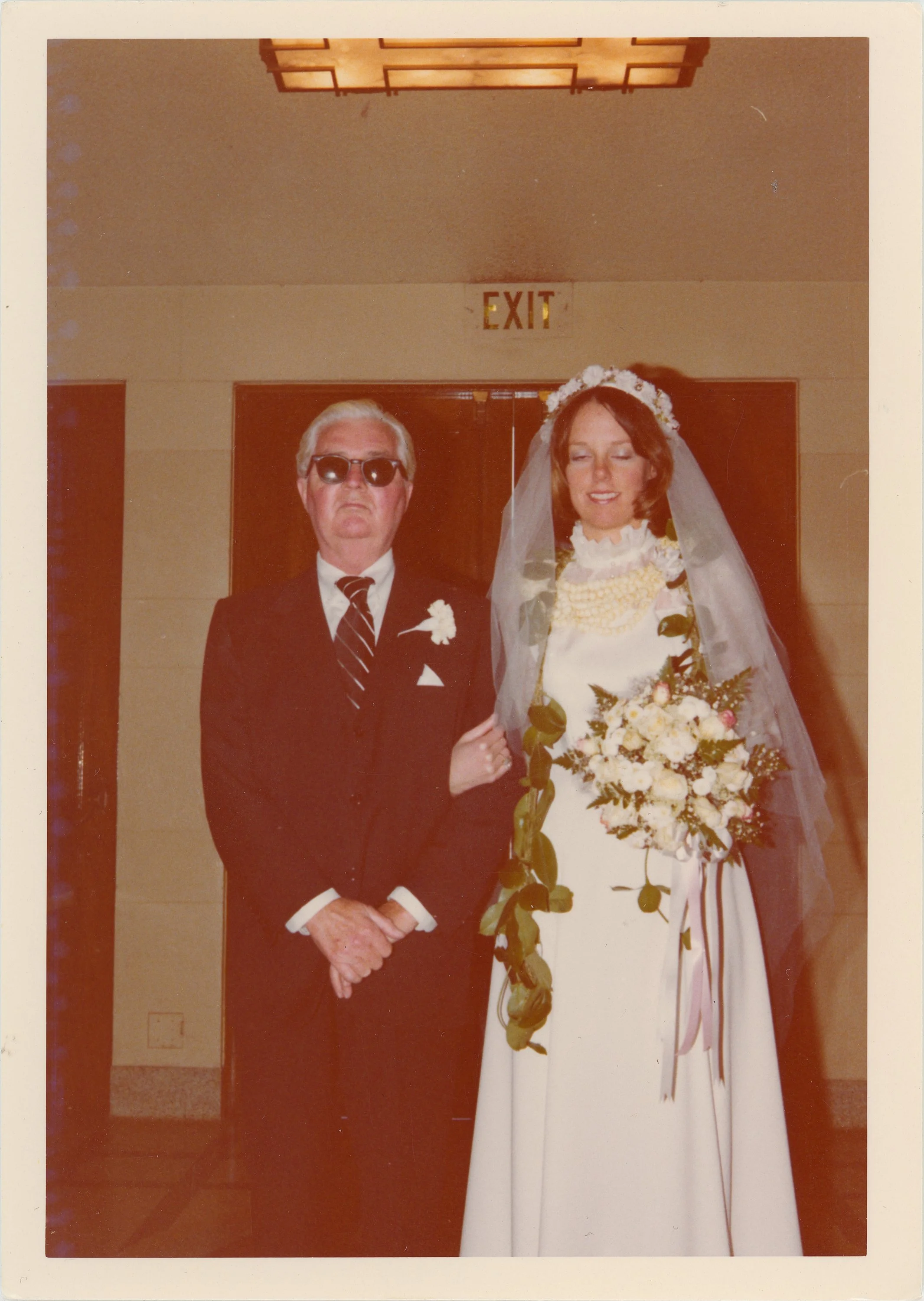
In Paper Lighthouse, the artist Keavy Handley-Byrne brings together found images of women with their eyes closed: accidental archival photographs tossed aside before there was a delete button. “But accident always plays a role in photography,” writes artist and writer Margaret Sartor, in her essay included in the book. “Because it is precisely in the unpredictable and unintentional details of a photograph that the magic of the medium flourishes.”
Referring to the New Brunswick town in which Handley-Byrne’s grandmother grew up, known for its lighthouse, Handley-Byrne departs on a wayfinding journey towards their grandmother through the interior world behind these womens’ eyes – a world, as Sartor writes, that is “as large and unfathomable as the Milky Way and as private as the scenes that play out in these pictures.”
She was notorious, my mother says, for blinking or closing her eyes at exacty the moment the shutter released. There are only a few photographs of her that I can call to mind and fewer still where her eyes are open. I began collecting photographs of other women with their eyes closed, trying to find what I could of my grandmother in their faces. Perhaps I expect their eyes to open, to reveal that they have been my grandmother all along. I keep looking for a photograph that can tell me the truth about her life.






You Can Close Your Eyes
Essay by Margaret Sartor
“Close your eyes,” I hear James Taylor singing, in my mind, as I look through this carefully curated selection of pictures. “You can close your eyes, it’s all right.” And though I have been told this song is a lullaby, I always hear it as a kind of eulogy, one that rings of grace and comfort and care, but also of loss and impending danger.
Close your eyes.
Go on, go inside, find yourself there, inside yourself. And others will look upon the blank screen of your closed lids in wonder and confusion at your private experience of your own life.
It’s all right.
There are paradoxes to consider. Closing your eyes may be the visual equivalent of a sigh, a surrender to what is. Or a form of denial. It can be a means of escape or indicate a steeling against assault. But the explanation we most readily reach for, while no less certain or provable than any other, is that closing our eyes comes naturally when our senses swell with gratitude or in primal pleasure. We also close our eyes in prayer. But if closing your eyes is evidence of a door closing to the world outside, for whatever reason, involuntarily or on purpose, might it be so that another opens within?
We know that a photograph is a record of a mere fraction of a second of reflected light, a literal blink of the eye, and these pictures, odd but not unfamiliar, can easily be explained away as accidents. But accident always plays a role in photography. Because it is precisely in the unpredictable and unintentional details—such as closed or closing eyes—of a photograph that the magic of the medium flourishes.
Photographs move us in ways we don’t fully comprehend. Like a song, an image strikes a chord within and reverberates, uninvited, and occasionally in ways that are unwelcome. The photograph outlives its maker just as the song outlives the songwriter. And they are similarly treasured, not for the answers they provide but for the questions and feelings they inspire. Perception and meaning change from person to person. Over time, they change within the same person. This is why we look, again and again, over decades and generations, at snapshots of people we know or have known, of family and characters we never knew, yet we carry with us. Even in anonymity—sometimes especially in anonymity—a photograph can nudge or take us somewhere inside ourselves where we need to go.
“No one’s gonna take that time away,” croons sweet baby James. “You can stay as long as you like.” I look at the pictures collected here and fall into their mystery. Falling in, I project myself onto the unfinished story of someone else’s life. With some, looking flips a switch that begins the unwinding of my own reels of memory and experience. With others, I find myself entering into the eternally ongoing moment of the image and, illogically but instinctively, hoping that she—that is, the she in the picture—will open her eyes to me. This will never happen. That door is bolted. And in the light of my disappointment, I can see that the real challenge these pictures, collectively, pose is: Will I open my eyes to myself? This is how illumination happens.
No one’s gonna take that time away.
The world within, behind the eyes, anyone’s eyes, is as large and unfathomable as the Milky Way and as private as the scenes that play out in these pictures: at a kitchen table, on the beach, behind a backyard hedge, on a rooftop. Open your eyes and just look at her blue floral house dress and high, eager wave as she prepares to tuck herself into the family car. Notice how she swoons, travels inward, at the apex of her generous goodbye, then let yourself bask in her glorious sweet smile.
You can stay as long as you like.